
Hidalgo Led Mexico in Economic Growth During the First Quarter of 2026
During the first quarter of the year, Hidalgo ranked as the state with the highest economic growth, recording an annual rate of 8.2%. The top three were completed by Tamaulipas (5.3%) and Colima (3.8%).
According to the Quarterly Indicator of State Economic Activity (ITAEE), prepared by the National Institute of Statistics and Geography (INEGI) using seasonally adjusted figures, 20 of Mexico’s 32 states recorded economic growth.
In the case of Hidalgo, the state expanded across all three sectors of economic activity, although the secondary sector provided the greatest momentum. According to economic analyst Kristobal Meléndez, this was “driven mainly by the construction industry, particularly in the area bordering the Felipe Ángeles International Airport.”

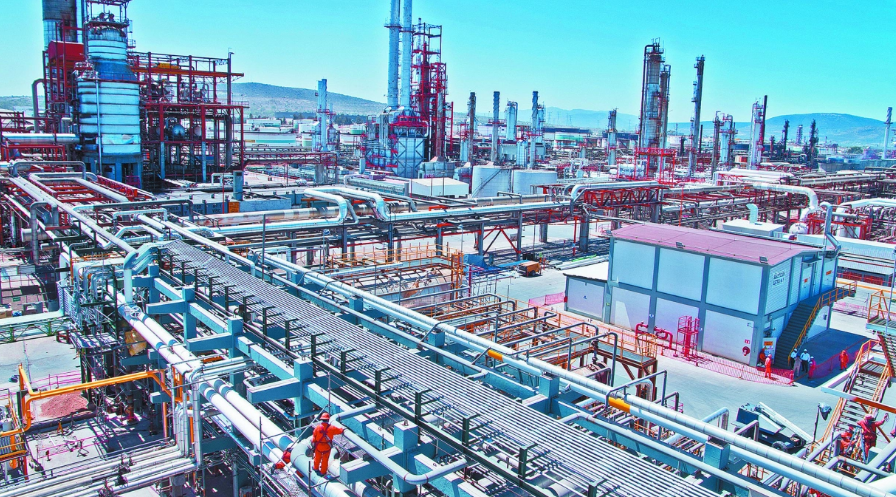
This corridor forms part of Plan México and will host a Wellbeing Development Hub (Podecobi) in the municipality of Zapotlán. According to the document Strategic Sectors to Promote Economic Development in the Regions of Hidalgo State, its proximity to Mexico City provides the opportunity to establish the region as a logistics hub for central Mexico, prioritizing the chemical industry and wholesale trade.
Additionally, the Circular Economy Development Hub for Wellbeing (Podecibi) Parque Hidalgo will be established in the Tula region. Hidalgo also ranked as the country’s leader in industrial growth, with an annual increase of 15.3% in March, with manufacturing being the second most significant branch of the secondary sector.
Strong Performance
Meanwhile, Tamaulipas ranked second in economic growth with a rate of 5.3%, which, according to the state government, represents the state’s strongest economic performance in recent years and makes it the largest contributor to national economic growth during the period evaluated.
Primary activities grew by more than 16%, while secondary activities recorded growth of nearly 10%. According to the analyst, the state’s manufacturing performance and proximity to the United States contributed significantly to these results.
As of the end of March this year, according to INEGI, the state had 350 establishments operating under the Manufacturing, Maquiladora, and Export Services Industry Program (IMMEX). In addition, projects currently under development include the North Port of Matamoros, the Inland Port in Victoria, and the Podecibi in Altamira.
Colima completed the top three with an annual ITAEE increase of 3.8%, driven by port development, with significant activity anticipated in Manzanillo, where highway connectivity projects are also underway.
Declining Performance
At the opposite end, Campeche recorded the steepest annual decline, with a 5.3% decrease in economic activity. It was followed by Coahuila (-4.5%) and Morelos (-3.1%) during the first three months of 2026. All three states were affected by declines in the industrial sector of their economies.
In Coahuila, the decline was attributed to the slowdown in nearshoring and the impact of tariffs on the automotive industry. Campeche’s decline was linked to the oil sector, while Morelos experienced contraction following the closure of Nissan’s Civac plant.
Overall, 12 states posted annual declines in their ITAEE.
The tertiary sector generated the greatest economic momentum, with the largest contributions coming from states containing the country’s major metropolitan areas, including the State of Mexico, Nuevo León, Mexico City, and Jalisco. According to the specialist, “consumption in large cities shows greater variation because of employment levels and purchasing power.”
Regarding the primary sector, the report notes that Jalisco, Sinaloa, and Veracruz experienced declines, while Guanajuato and Michoacán recorded growth due to seasonal effects involving agricultural products with high seasonal demand, such as avocados during the Super Bowl.
Source: eleconomista